

My 30-Second Summary:
Modern "vegan" shaving soaps are popular, the traditional use of Tallow (rendered beef fat) isn’t just a Victorian leftover. It's chemistry. Tallow naturally contains a high concentration of long chain fatty acids, especially stearic acid. This creates a denser, more stable, more protective lather than most vegetable oils can achieve on their own.
A few months ago, I found myself looking at a puck of shaving soap. I realised that for all our modern technology, we are still essentially using a formula perfected in the 1800s. "It reminded me of the heavy ceramic bowls, and boar hair brushes I used to see in my local barber's window in the early 1970s."
Today, the market is clearly split. Vegan soaps are everywhere, often marketed as the cleaner, modern choice. But I wanted to know:
Is tallow soap genuinely superior, or are we just being nostalgic for the past?
After digging into the chemistry, and having testing dozens of soaps over the years, the answer is more interesting than I expected.
The Molecular Secret: Stearic Acid
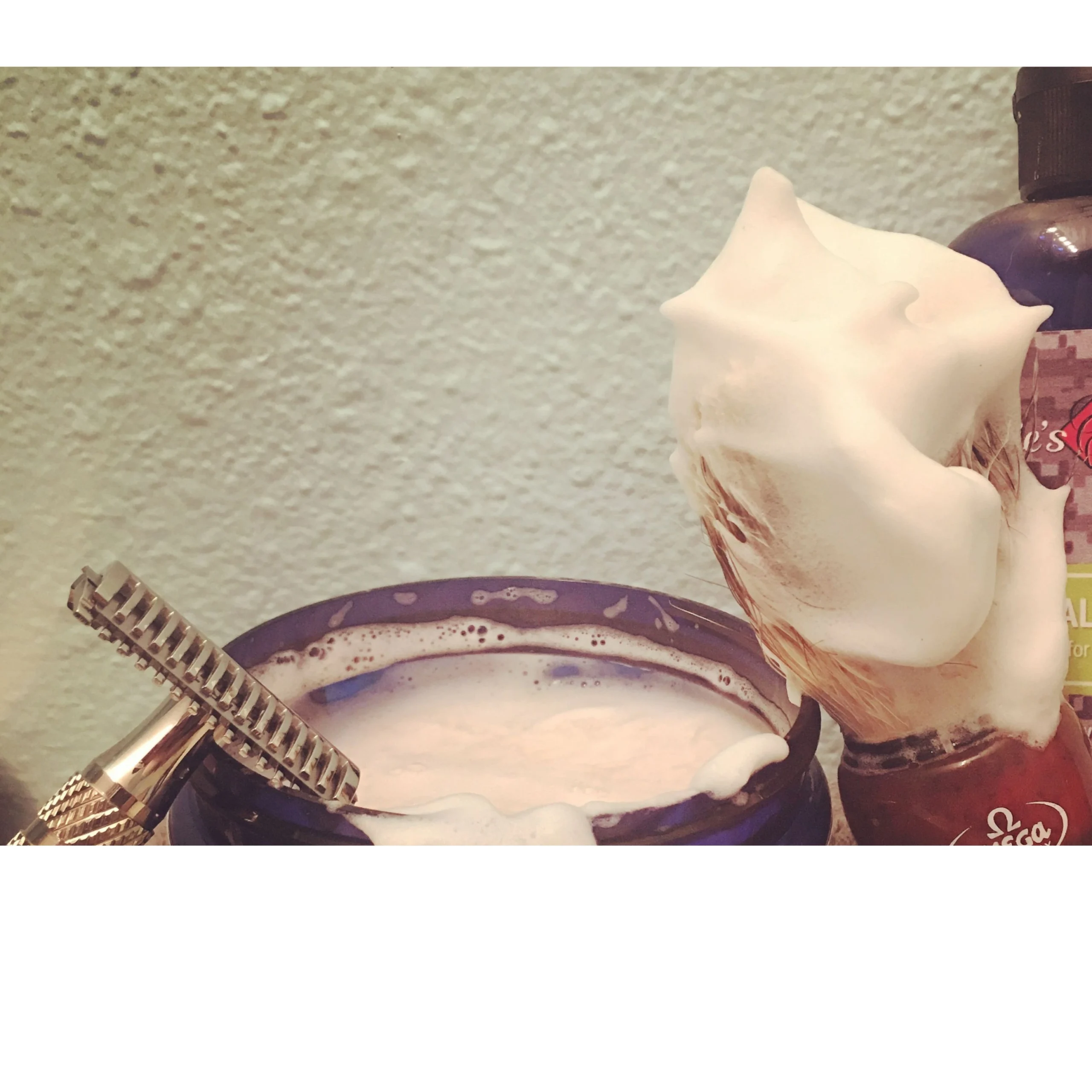
To understand why tallow works, we have to look at the chemistry of a bubble. (Boring but important to understand) A shaving lather isn't just "bubbles." It is designed to hold a sharp piece of steel away from your skin while allowing it to cut the hair cleanly.
The key molecule behind that structure is stearic acid, a long chain fatty acid that creates:
- Dense, creamy foam
- High stability
- A protective “cushion” under the blade
Why Tallow Works So Well
Tallow is naturally rich in stearic acid. When saponified, it produces a lather that:
- Builds quickly
- Feels creamy rather than airy
- Stays hydrated on the face
- Resists collapsing under heat and pressure
If your lather ever vanishes halfway through a pass, it’s usually because the soap lacks these heavier fatty acids.
As I found when researching mid‑century soap formulations, the goal wasn’t “bubbles.” It was support. Think of stearic rich tallow as the rebar inside concrete. It’s the hidden structure that keeps everything standing.
Why Vegan Soaps Struggle
Most vegetable oils (olive, coconut, almond, etc.) don’t naturally contain enough stearic acid.
To compensate, manufacturers often add:
- Palm‑derived stearic acid
- Hydrogenated vegetable fats
- Stabilising agents
Some vegan soaps are excellent, but they are, in effect, recreating what tallow already provides.
Tallow vs Vegan Shaving Soap: Side by Side Comparison
Feature | Tallow Soap | Vegan Soap |
|---|---|---|
Lather Density | Thick, creamy, stable | Can be airy unless fortified |
Glide | Excellent due to long chain fatty acids | Good, varies by formula |
Cushion/Protection | Strong, ideal for coarse beards | Moderate, depends on stearic content |
Post Shave Feel | Soft, moisturised (especially with lanolin) | Cleaner, lighter finish |
Skin Type Match | Dry, sensitive, mature skin | Oily or combination skin |
Sustainability | Upcycled by‑product | Often palm oil dependent |
Easy to Lather | Very easy | Can be finicky with hard water |
Best For | Straight razors, tough beards | Modern scents, plant based routines |
The Sustainability Paradox
Many people choose vegan soaps for environmental reasons. But the chemistry tells a more nuanced story.
One of the most interesting things I discovered in my research is the ongoing "Green" debate. Many people choose vegan soaps because they feel they are better for the planet.
Palm Oil Dependence
Most vegan shaving soaps rely heavily on palm oil or palm‑derived stearic acid. As we know in the UK, palm oil production has contributed to significant deforestation, although certified sustainable palm oil (RSPO) is improving the situation.
Tallow as Upcycling
Tallow, by contrast, is a by‑product of the food industry. If not used in soap, it would often be discarded or processed into low‑value industrial materials.
Turning it into a high quality shaving soap is, in many ways, a form of traditional upcycling.
This doesn’t make tallow “better” for everyone, but it does make the sustainability debate more complex than the marketing suggests.


The British Gold Standard: Lanolin
You cannot talk about Tallow without mentioning the "Yorkshire Secret": Lanolin.
Many of our finest British soaps, such as Mitchell’s Wool Fat, combine tallow with lanolin (the natural oil from sheep's wool).
Brands like Mitchell’s Wool Fat combine:
- Tallow for glide
- Lanolin for post shave comfort
Lanolin is an occlusive moisturiser, meaning it traps water in the skin. It is an occlusive, meaning it traps moisture in your skin. This is why a traditional tallow/lanolin shave often leaves your face feeling soft rather than tight or dry.
My Verdict After 50 Years of Shaving
Vegan soaps have improved dramatically, and some are genuinely excellent. But in my experience, and in the chemistry, they are still trying to imitate what tallow does naturally.
If you have:
- Sensitive skin
- A coarse beard
- A straight razor
- Dry or cold weather skin
then a tallow‑based soap gives you a margin of safety that vegetable oils struggle to match.
It’s a triumph of 19th‑century chemistry that we haven’t truly surpassed.
Conclusion: Which should you choose?
Choose Tallow if you want:
- A dense, creamy, stable lather
- Maximum protection
- A traditional shaving experience
- Better performance with straight razors
Choose Vegan if you want:
- A lighter, cleaner‑rinsing lather
- A plant‑based routine
- A soap that suits oily skin
- A modern scent profile
Final Tip: Technique matters more than ingredients.
A great brush, the right water ratio, and proper loading will elevate any soap, irrespective of it being tallow or vegan.
What do you think?
If you want to try a traditional tallow shave, I’ve rounded up the best UK made options in my Guide to the Best Shaving Soaps UK.