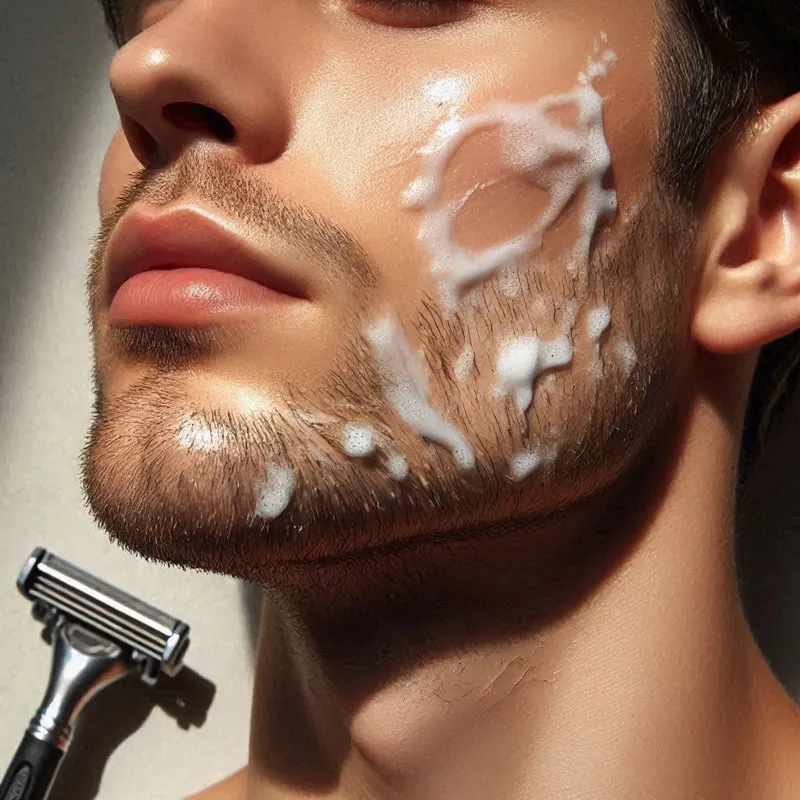
Patchy shaving happens when the razor misses areas of hair or cuts unevenly. This guide explains the causes and shows you how to fix patchy shaving for a smooth, even finish every time.
Why Patchy Shaving Happens
Patchy shaving is usually caused by uneven pressure, poor beard preparation, shaving too quickly or using a blade that isn’t sharp enough. Sometimes the hair grows in different directions, and the razor simply doesn’t catch it. Understanding the cause makes it much easier to correct the problem and get a clean, consistent shave.
Prepare the Beard Properly
Patchiness often starts before the razor even touches your face. If the beard isn’t softened, the razor struggles to cut the hair cleanly, leaving behind uneven patches. Warm water softens the hair shaft and makes it easier for the blade to glide through.
Shaving after a warm shower is ideal, but even splashing warm water for half a minute can make a noticeable difference. Letting your shaving cream sit on the skin for a short time also helps the hair absorb moisture and stand up straighter.
Use a More Protective Lather
A thin or weak lather doesn’t lift the hairs properly, which leads to missed spots. A good shaving cream or soap creates a cushion that helps the razor glide evenly across the skin.
Foams from a can often collapse quickly and don’t provide enough structure to keep the hairs upright. A richer lather gives the razor a smoother path and reduces the chance of patchy areas.
Check Your Razor Angle
If the razor isn’t positioned correctly, the blade won’t meet the hair at the right cutting angle.
Cartridge razors are more forgiving because the angle is built in, but pressing too hard still causes the razor to skim over some hairs.
Safety razors require a consistent angle to cut efficiently. If the angle is too shallow, the blade scrapes without cutting; if it’s too steep, it digs and skips. Finding the right angle ensures the blade meets every hair cleanly.
Use Light, Controlled Strokes
Patchy shaving often comes from rushing. Long, fast strokes make it easy to miss areas, especially around the jawline, chin and neck. Short, controlled strokes give you more accuracy and help the razor maintain consistent contact with the skin. If you feel the need to push harder, the blade is either dull or the lather isn’t protective enough.
Follow the Grain of Your Beard
Hair grows in different directions across the face. If you shave without understanding your grain pattern, you’ll naturally miss areas where the hair lies flat or grows sideways.
Mapping your beard growth helps you shave each section in the direction that catches the hair properly. A with‑the‑grain pass removes the bulk of the hair evenly, and a second pass across the grain helps tidy up any remaining patches.
If your passes feel uneven, the with‑the‑grain shaving guide explains how to structure your shave for better coverage.
Keep the Blade Clean
A clogged razor can’t cut properly. Hair, lather and oil build up between the blades and stop the razor from making full contact with the skin. Rinsing under warm running water keeps the edge clear and ensures the blade cuts evenly across the entire stroke.
If you’re using a cartridge razor, tapping it gently on the sink can help dislodge trapped hairs, but avoid hitting it too hard or you’ll damage the cartridge.
Use a Sharp Blade
A dull blade drags across the skin and leaves behind uneven patches.
Cartridge razors should be replaced regularly, especially if you feel resistance or scraping.
Safety razor blades should be swapped frequently because a single blade dulls faster than a multi‑blade cartridge. If you feel tugging or skipping, the blade is already past its best.
You can also improve glide by following the tugging and pulling guide.
Pay Extra Attention to Difficult Areas
The jawline, chin, upper lip and neck are the most common places for patchy shaving. These areas have curves, angles and hair that grows in multiple directions.
Slowing down and adjusting your angle slightly helps the blade catch every hair. Stretching the skin gently can also lift the hairs and make them easier to cut.
Beginners who struggle with consistency may benefit from the shaving mistakes guide.
Patchy Shaving Is Easy to Fix
Patchy shaving is usually caused by small technique issues rather than anything serious. Once you improve your preparation, angle, pressure and stroke control, the razor glides more consistently and catches every hair. A smooth, even shave becomes much easier once the fundamentals are in place.