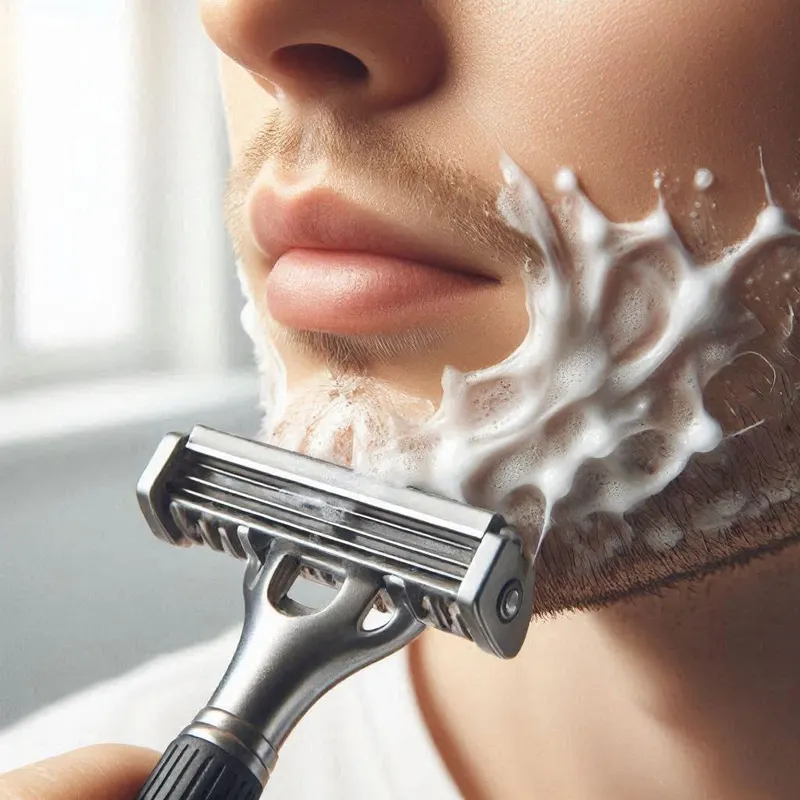
Tugging and pulling during shaving means the razor isn’t cutting the hair cleanly. This guide explains the causes and shows you how to fix tugging for a smoother, more comfortable shave.
Why Tugging Happens
Tugging and pulling occur when the razor struggles to slice through the hair. This usually means the blade is dull, the beard isn’t softened enough, the lather isn’t protective, or the shaving angle is off. Sometimes it’s a combination of all four. Understanding the cause makes it much easier to fix the problem and get a smoother shave.
Make Sure the Blade Is Sharp
A dull blade is the number‑one cause of tugging. When the edge loses sharpness, it drags the hair instead of cutting it cleanly.
Cartridge razors should be replaced regularly, especially if you feel resistance or scraping.
Safety razor blades should be swapped frequently because a single blade dulls faster than a multi‑blade cartridge. If you feel tugging at the start of a shave, the blade is already past its best.
Hydrate the Beard Properly
Dry hair is tough hair. When the beard isn’t softened, the razor has to work harder, which leads to pulling. Warm water softens the hair shaft and makes it easier for the blade to cut through.
Shaving after a warm shower is ideal, but even splashing warm water for thirty seconds can make a noticeable difference. Letting your shaving cream sit on the skin for a short time also helps the hair absorb moisture.
Use a More Protective Lather
Thin or dry lather increases friction and makes tugging worse. A good shaving cream or soap creates a cushion between the blade and the skin, helping the razor glide smoothly.
Foams from a can often dry out quickly and don’t provide enough protection. A brush‑built lather or a high‑quality cream gives better hydration and glide, reducing resistance as the razor moves.
Check Your Shaving Angle
If the razor isn’t positioned correctly, the blade won’t meet the hair at the right cutting angle.
Cartridge razors are more forgiving because the angle is built in, but pressing too hard still causes drag.
Safety razors require a consistent angle, usually around thirty degrees, to cut efficiently. If the angle is too shallow, the blade scrapes; if it’s too steep, it digs. Finding the right angle eliminates unnecessary pulling.
Reduce Pressure
Pressing harder doesn’t make the shave closer — it makes it worse. Too much pressure bends the hair before cutting it, which creates that dragging sensation.
Light pressure allows the blade to glide naturally and cut the hair cleanly. If you feel the need to push, the blade is either dull or the lather isn’t protective enough.
Shave With the Grain First
Shaving against the grain on the first pass almost guarantees tugging. The hair is at its longest and toughest, and cutting it from the wrong direction increases resistance. A with‑the‑grain pass removes the bulk of the hair gently. Once the first pass is complete, the hair is shorter and easier to cut from other directions.
Rinse the Blade Frequently
A clogged razor can’t cut properly. Hair, lather and oil build up between the blades and create drag. Rinsing under warm running water keeps the edge clear and reduces resistance.
If you’re using a cartridge razor, tapping it gently on the sink can help dislodge trapped hairs, but avoid hitting it too hard or you’ll damage the cartridge.
Use the Right Razor for Your Beard Type
Some razors tug more than others depending on your hair thickness and skin sensitivity. Men with coarse or curly hair often get better results from a safety razor because the single blade cuts cleanly without pulling.
Those with fine or straight hair may find cartridge razors perfectly comfortable. Electric shavers can also reduce tugging because the blades don’t make direct contact with the skin.
Fixing Tugging Is About Technique and Preparation
Tugging is almost always a sign that something in your routine needs adjusting. A sharp blade, proper hydration, protective lather and gentle technique work together to create a smooth, comfortable shave. Once you correct the underlying cause, the razor glides effortlessly and the shave becomes far more enjoyable.