Shaving with a safety razor gives a closer, smoother shave, but only if you use the right technique. This guide walks you through the exact steps, angles, pressure, and passes you need for a comfortable, irritation‑free shave.
Why Technique Matters With a Safety Razor
A safety razor uses a single, exposed blade. That means:
- You control the angle
- You control the pressure
- You control the shave
Once you learn the technique, you’ll get:
- Less irritation
- Fewer ingrown hairs
- A closer shave
- Lower long‑term cost
1. Prep Your Skin Properly
Good prep makes the shave smoother and reduces irritation.
Before shaving:
- Wash your face with warm water
- Apply a warm towel for 30 seconds
- Use a quality shaving cream or soap
- Add pre‑shave oil if you have sensitive skin
2. Hold the Razor at a 30° Angle
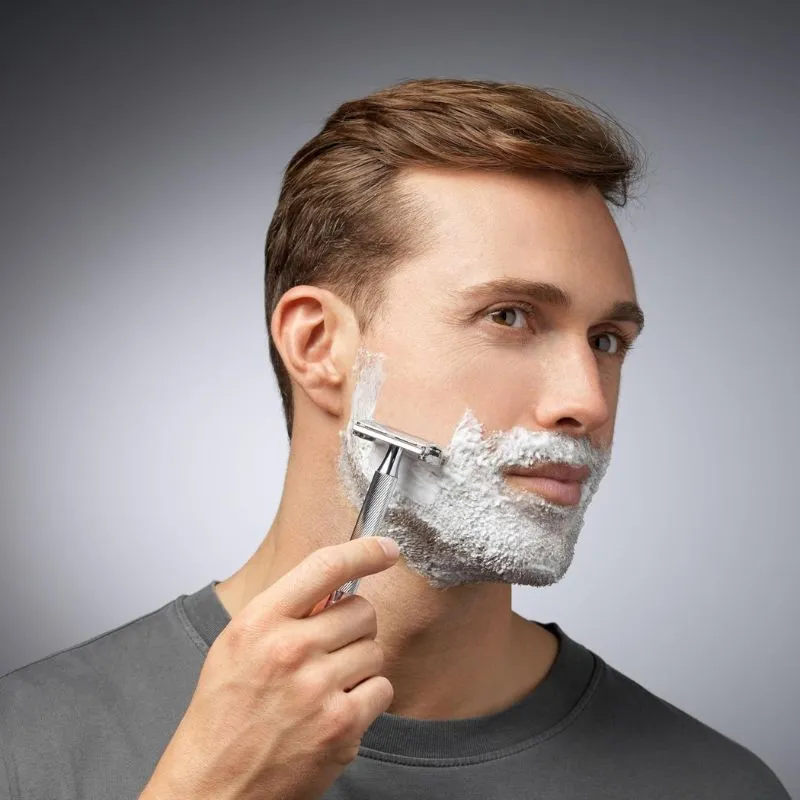
This is the most important part of safety razor technique.
How to find the angle:
- Place the razor flat against your cheek
- Slowly tilt it downward until the blade just begins to cut
- That’s roughly 30° — keep it consistent
Too steep:
- Causes scraping and irritation
Too shallow:
- Won’t cut the hair properly
3. Use Almost No Pressure
Let the weight of the razor do the work.
Tips:
- Hold the razor at the bottom of the handle
- Use your fingertips, not a tight grip
- Glide the razor gently over the skin
If you’re pressing, you’re doing it wrong.
4. Use Short, Controlled Strokes
Safety razors work best with short, precise movements.
Why short strokes?
- Better control
- Less chance of nicks
- Easier to maintain angle
- Cleaner results
Rinse the blade every 2–3 strokes to keep it sharp and clean.
5. Shave With the Grain First
Your first pass should always follow the direction of hair growth.
Correct shaving order:
- With the grain
- Across the grain
- Against the grain (optional)
Going against the grain too early causes irritation and ingrown hairs.
6. Re‑Lather Between Passes
Never shave over bare skin.
Why re‑lather?
- Reduces friction
- Protects the skin
- Softens the hair
- Prevents razor burn
7. Use the Right Blade for Your Skin
Blades vary in sharpness and smoothness.
Sharp blades (Feather, Gillette Yellow):
- Best for coarse hair
- Very efficient
Smooth blades (Astra Green, Derby Extra):
- Best for sensitive skin
- More forgiving
You can read more about the best blades for beginners.
8. Stretch the Skin Gently
Use your free hand to pull the skin tight.
Why it helps:
- Creates a flat surface
- Reduces nicks
- Gives a closer shave
Especially important on the neck and jawline.
9. Rinse With Cold Water After Shaving
Cold water:
- Closes pores
- Reduces redness
- Calms irritation
Then pat dry — don’t rub.
10. Apply a Soothing Aftershave Balm
Avoid alcohol‑based splashes — they dry the skin and increase irritation.
Look for ingredients like:
- Aloe vera
- Witch hazel
- Chamomile
- Niacinamide
Common Mistakes to Avoid
- Pressing too hard
- Using the wrong angle
- Shaving too fast
- Not re‑lathering
- Using dull blades
- Going against the grain too early
If you’re getting razor burn or tugging, our Safety Razor Troubleshooting guide will help.
Troubleshooting
Razor burn:
- Reduce pressure
- Improve prep
- Switch to a smoother blade
Tugging:
- Blade is dull
- Lather too dry
- Angle too shallow
Nicks & cuts:
- Angle too steep
- Too much pressure
For a full overview of razor types, blades, and technique, see our Complete Safety Razor UK Guide.