Quick Summary
Choosing the right safety razor blade makes a huge difference to comfort, irritation, and confidence. This is especially true when you’re new to wet shaving. This guide breaks down the best beginner‑friendly blades available in the UK, explains what makes a blade “mild” or “smooth”, and helps you match the right blade to your razor and skin type.
Razor blades are mainly used with safety razors, so you may also find this article interesting. Read our Complete Safety Razor UK Guide
Why Blade Choice Matters
Safety razor blades vary massively in:
- Sharpness
- Smoothness
- Coating
- Thickness
- Forgiveness
A beginner needs a blade that is:
- Smooth (glides easily)
- Forgiving (won’t punish small mistakes)
- Consistent (predictable shave every time)
- Affordable (you’ll no doubt end up trying out a few brands)
Aggressive or ultra‑sharp blades can cause:
- Razor burn
- Tugging
- Nicks
- Over‑shaving
So starting with the right blade sets you up for success.
What Makes a Blade “Beginner‑Friendly”?
A good beginner blade has:
- PTFE or platinum coating — reduces friction
- Medium sharpness — enough to cut cleanly, not enough to bite
- Smooth grind — consistent edge with no micro‑serrations
- Predictable feel — same performance every shave
Avoid:
- Feather Hi‑Stainless (too sharp for most beginners)
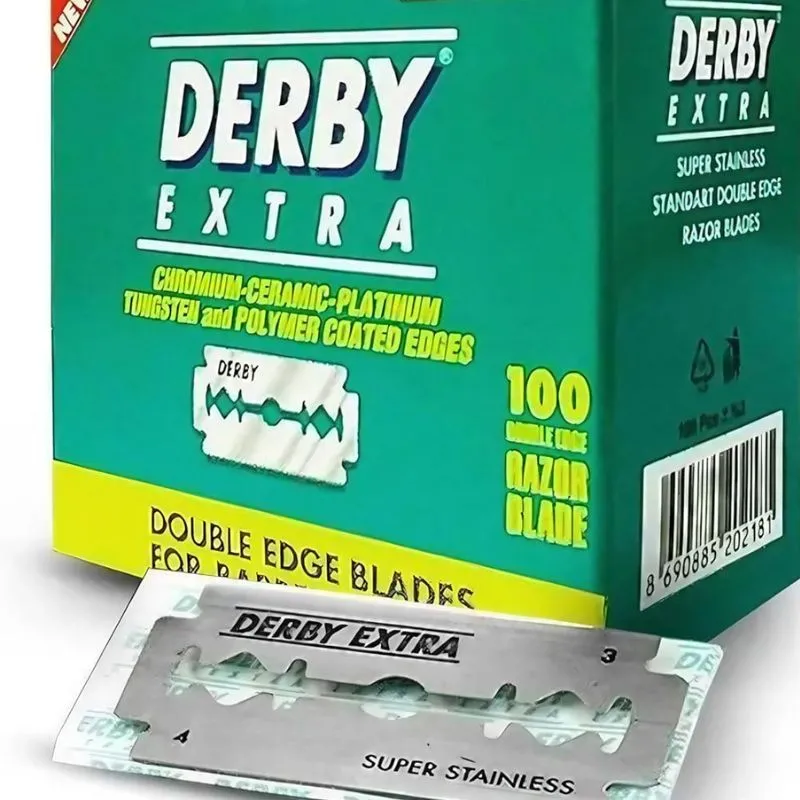
- Derby Extra (can tug depending on razor)
- Uncoated stainless blades (less glide)
Best Safety Razor Blades for Beginners (UK)
1. Astra Superior Platinum (Green Pack)
Why they’re great: Astra SP blades are the perfect balance of sharpness and smoothness. They glide well, rarely tug, and work in almost every razor.
Best for: Sensitive skin, mild razors, everyday shaving.
Performance:
- Medium‑sharp
- Very smooth
- Forgiving
- Cheap (around £8–£10 for 100)
2. Gillette Silver Blue
Why they’re great: Premium feel, ultra‑smooth coating, and excellent consistency.
Best for: Normal to sensitive skin, mild or medium razors.
Performance:
- Medium sharpness
- Very smooth
- Long‑lasting
3. Personna Platinum (Israeli Reds)
Why they’re great: Extremely smooth and gentle — ideal for anyone prone to razor burn or irritation.
Best for: Sensitive skin, coarse stubble, neck shaving.
Performance:
- Mild‑medium sharpness
- Very forgiving
- Excellent for tricky areas
If you’re struggling with irritation, read “Safety Razor Troubleshooting: Fix Razor Burn, Tugging & Nicks”.
4. Wilkinson Sword Classic (UK)
Why they’re great: Easy to find in supermarkets and pharmacies. Coated for smoothness and very beginner‑friendly.
Best for: Absolute beginners, light to medium stubble.
Performance:
- Mild
- Smooth
- Very forgiving
5. Shark Super Chrome
Why they’re great: Chrome coating gives a smooth glide, and they work well in mild razors.
Best for: Beginners with sensitive skin or lighter stubble.
Performance:
- Mild‑medium sharpness
- Smooth
- Affordable
See our full How to Shave With a Safety Razor (Step‑by‑Step UK Guide)
Blade Sharpness Scale (Beginner‑Friendly Only)
| Blade | Sharpness | Smoothness | Forgiveness |
|---|---|---|---|
| Astra SP | Medium | High | High |
| Gillette Silver Blue | Medium | Very High | High |
| Personna Platinum | Mild‑Medium | Very High | Very High |
| Wilkinson Sword | Mild | High | Very High |
| Shark Super Chrome | Mild‑Medium | Medium‑High | High |
How to Choose the Right Blade for Your Skin
Sensitive Skin
Choose: Personna Platinum, Wilkinson Sword, Astra SP Avoid: Feather, Derby Extra
Coarse Beard
Choose: Astra SP, Gillette Silver Blue Avoid: Mild blades (may tug)
Daily Shaving
Choose: Astra SP, Personna Platinum
Shaving Every 2–3 Days
Choose: Gillette Silver Blue, Astra SP
Visit our Safety Razor Troubleshooting: Fix Razor Burn, Tugging & Nicks guide
How Often Should Beginners Change Blades?
Most beginners should change blades every 3–5 shaves.
If you feel tugging, dragging, irritation, or reduced glide — it’s time to swap.
Final Tips for Beginners
- Start with Astra SP or Personna Platinum
- Use a mild razor (DE89, Merkur 34C, Rockwell 6C plates 1–3)
- Keep pressure light
- Use short strokes
- Let the blade do the work
- Change blades regularly
Disclosure: This article contains Amazon affiliate links. As an Amazon Associate, I earn from qualifying purchases. This helps support the site at no extra cost to you.