This article contains Amazon affiliate links. As an Amazon Associate, I earn from qualifying purchases. This helps support the site at no extra cost to you.
Safety razor blades are small, sharp, and easy to mishandle if you’re not careful. Proper storage keeps blades dry, rust‑free, and safe. Proper disposal prevents injuries and ensures blades are recycled correctly. See our full How to Shave With a Safety Razor (Step‑by‑Step UK Guide)
This guide explains everything you need to know about storing and disposing of safety razor blades in the UK — safely, cleanly, and responsibly.
Quick Summary
- Store blades in a dry, sealed container
- Keep new blades away from moisture
- Use a blade bank for used blades
- Never throw loose blades in the bin
- Many UK recycling centres accept blade banks
- Stainless blades can be recycled once sealed
Why Proper Storage & Disposal Matters
Safety razor blades are:
- Extremely sharp
- Small and easy to lose
- Rust‑prone if stored wet
- Dangerous if thrown away loose
Good storage prevents accidents. Good disposal protects bin workers and ensures proper recycling. Read our Complete Safety Razor UK Guide
How to Store New Safety Razor Blades
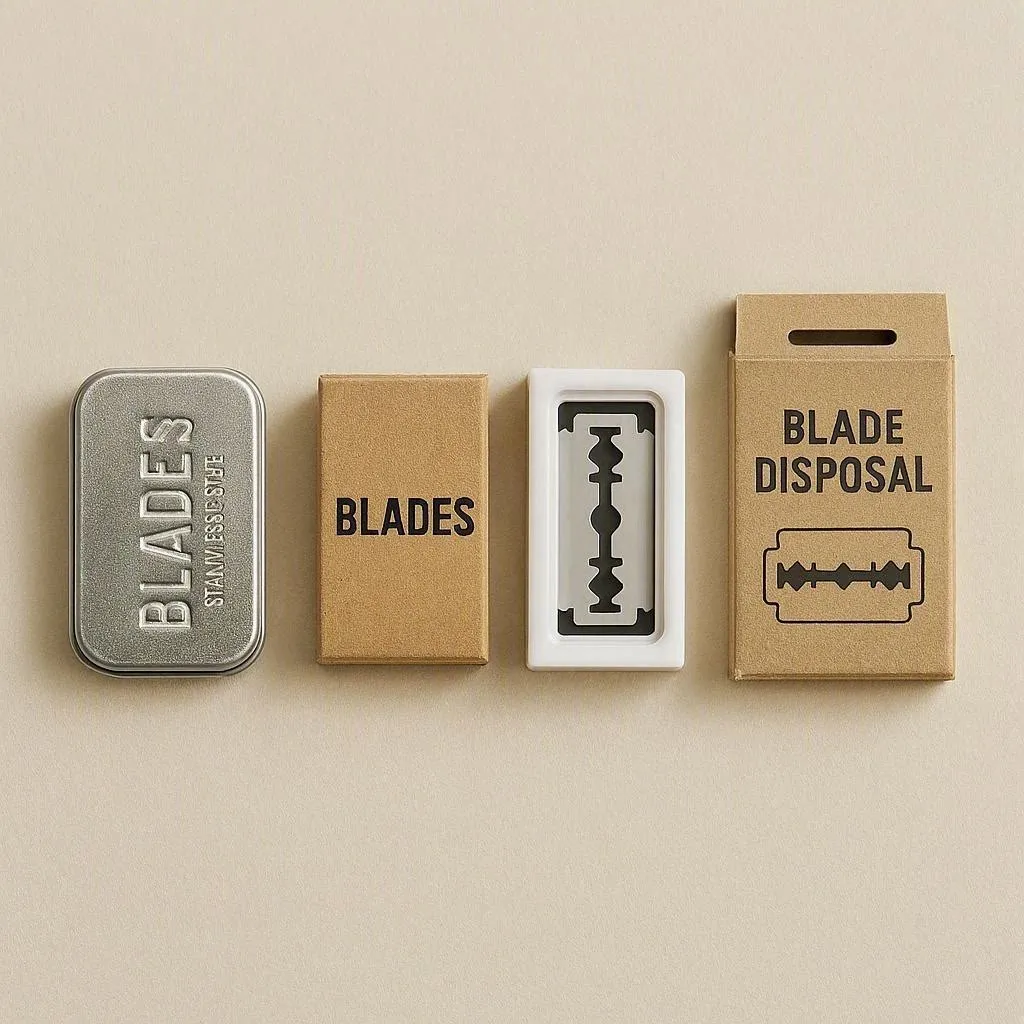
New blades come wrapped in paper and sealed in cardboard packs — but they still need proper storage.
Best storage method:
- Keep blades in a dry drawer or cabinet
- Store them in their original packaging
- Avoid bathrooms with high humidity
- Keep them away from children and pets
Optional:
Use a small metal tin or blade organiser for extra protection.
How to Store Blades Inside Your Razor
If you leave a blade inside your razor between shaves:
Do this:
- Rinse thoroughly
- Shake off excess water
- Air‑dry the razor upright
- Store in a dry place
Avoid:
- Leaving the razor in the shower
- Storing it in a closed, damp cabinet
- Wiping the blade with a towel (dulls the edge)
For blade longevity tips, read Safety Razor Blade Longevity Explained.
How to Store Used Blades Safely
Used blades should never be left loose.
Best method: Use a Blade Bank
A blade bank is a small metal or plastic container with a slot for inserting used blades.
Benefits:
- Safe
- Sealed
- Rust‑proof
- Recyclable (metal banks)
You can buy a blade bank or make one from:
- An empty metal tin
- A used blade pack
- A small jar with a sealed lid
Just make sure the container is puncture‑proof.
How to Dispose of Safety Razor Blades (UK)
UK disposal rules vary slightly by council, but the safest method is universal:
1. Seal used blades in a blade bank
Never throw loose blades in the bin.
2. When full, seal the blade bank
Tape the slot closed.
3. Dispose according to your council rules
Most UK councils accept sealed blade banks in:
- Metal recycling (if the bank is metal)
- General waste (if the bank is plastic)
Important:
Loose blades are never accepted in recycling.
Can Safety Razor Blades Be Recycled in the UK?
Yes — but only when sealed.
Recyclable:
- Stainless steel blades
- Metal blade banks
Not recyclable:
- Loose blades
- Plastic blade banks
- Mixed‑material containers
Always check your local council’s recycling guidelines.
DIY Blade Bank Options (Safe & Cheap)
You can make a blade bank from:
1. An empty metal tin
- Coffee tin
- Mint tin
- Small food tin
2. An empty blade pack
Once full, tape it shut.
3. A small glass jar
Strong, puncture‑proof, and reusable.
4. A 3D‑printed blade bank
Many wet shavers print their own.
What NOT to Do
Avoid these common mistakes:
- Throwing loose blades in the bin
- Leaving used blades in the razor
- Storing blades in damp bathrooms
- Using cardboard containers for disposal
- Leaving blades where children can reach them
How Many Blades Fit in a Blade Bank?
Most blade banks hold:
- 50–200 blades depending on size
- A standard metal tin can hold years’ worth of blades
Once full, seal and dispose.
Safety Tips for Handling Blades
- Hold blades by the short edges
- Never wipe blades with a towel
- Replace blades as soon as they tug
- Keep blades away from children
- Store used blades immediately after removal
If you experience irritation, read Safety Razor Troubleshooting: Fix Razor Burn, Tugging & Nicks.
Read Safety Razor Blade Longevity Explained (UK Guide), Read Safety Razor Blade Coatings Explained (UK Guide)
Final Recommendation
Store your blades in a dry place, use a blade bank for used blades, and always dispose of them sealed. This keeps your home safe, protects bin workers, and ensures proper recycling. Read Best Safety Razor Blades for Beginners (UK Guide)
A simple blade bank is one of the best investments you can make in your shaving routine.