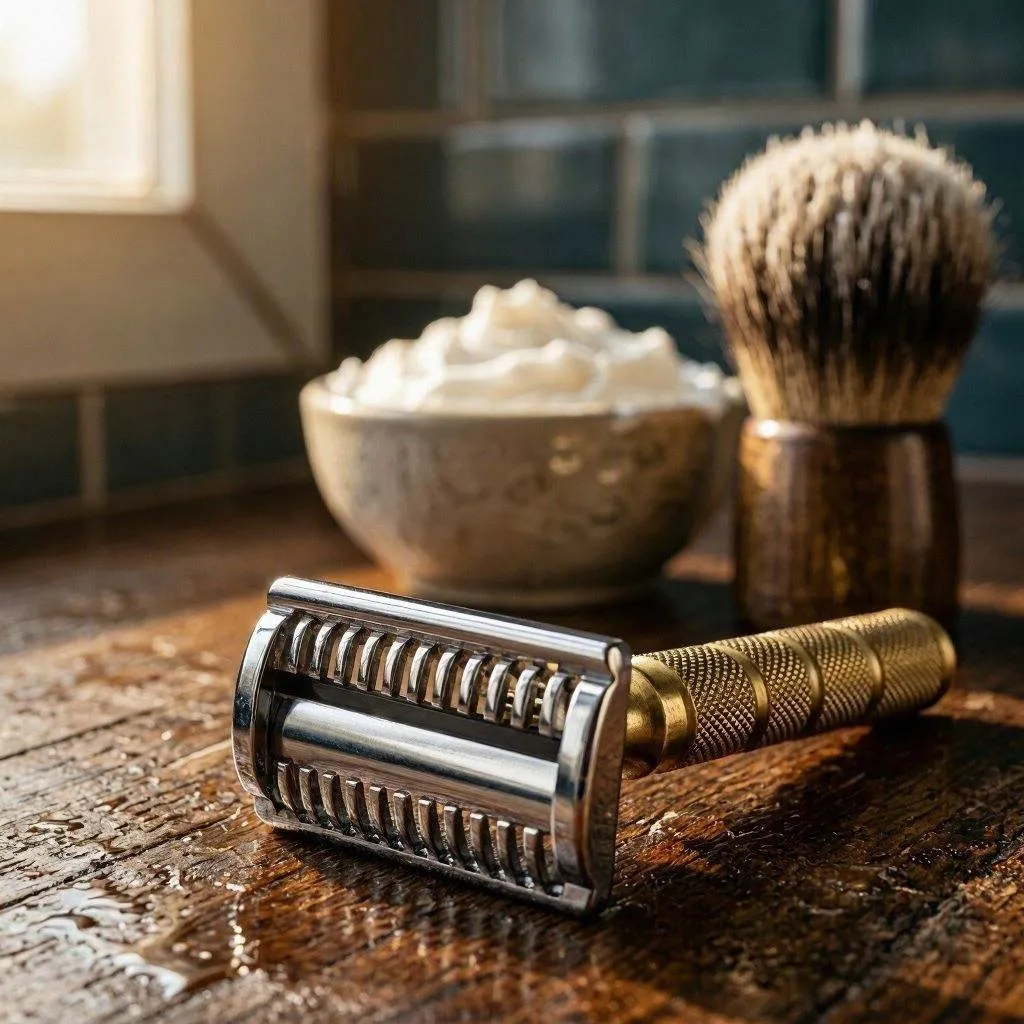
Safety razor aggressiveness is one of the most misunderstood topics in traditional wet shaving. Many beginners think “aggressive” means dangerous — but it simply describes how efficiently a razor cuts hair.
This guide breaks down what aggressiveness really means, how it’s measured, and how to choose the right level for your skin and beard type.
Quick Summary
Aggressiveness is determined by:
- Blade gap
- Blade exposure
- Shaving angle
- Razor head design
- Blade choice
Mild razors are smooth and forgiving. Aggressive razors cut closer and handle coarse stubble better.
Neither is “better” — it depends on your skin and beard.
What Is Razor Aggressiveness?
Aggressiveness describes how strongly a razor engages the blade with your skin and hair.
A more aggressive razor:
- Cuts closer
- Removes more stubble per pass
- Has more blade feel
- Requires better technique
A mild razor:
- Is smoother
- More forgiving
- Better for sensitive skin
- Ideal for beginners
The 3 Factors That Determine Aggressiveness
1. Blade Gap
The distance between the blade and the safety bar.
- Small gap = mild
- Large gap = aggressive
This is the biggest factor in aggressiveness.
2. Blade Exposure
How much of the blade sticks out past the razor head.
- Neutral exposure = mild
- Positive exposure = aggressive
Positive exposure increases blade feel and cutting power.
3. Shaving Angle
The angle at which the blade meets the hair.
Some razors naturally encourage a steeper angle, making them feel more aggressive.
Other Design Factors That Affect Aggressiveness
1. Razor Weight
Heavier razors cut more efficiently because gravity helps the blade glide.
2. Head Geometry
Open comb, slant, and adjustable razors tend to be more efficient.
3. Blade Choice
Sharp blades increase aggressiveness. Smooth blades reduce aggressiveness.
Read “Best Safety Razor Blades for Beginners (UK Guide)” for blade recommendations.
Mild vs Medium vs Aggressive Razors
Mild Razors
Examples:
- Edwin Jagger DE89
- Merkur 34C
- Rockwell 6C (R1–R3)
Best for:
- Beginners
- Sensitive skin
- Daily shaving
Medium Razors
Examples:
- Rockwell 6C (R3–R4)
- Parker Variant (low–medium settings)
Best for:
- Normal skin
- Medium stubble
- Daily or every‑other‑day shaving
Aggressive Razors
Examples:
- Mühle R41
- Merkur Futur (high settings)
- Rockwell 6C (R5–R6)
- Slant razors (Merkur 37C)
Best for:
- Coarse beard growth
- Shaving every 2–4 days
- Experienced users
How to Choose the Right Aggressiveness Level
Sensitive Skin
Choose: Mild Avoid: Aggressive razors
Coarse Beard
Choose: Medium–Aggressive Avoid: Very mild razors (can tug)
Beginners
Choose: Mild Increase aggressiveness slowly as technique improves.
Daily Shaving
Choose: Mild–Medium
Shaving Every 2–4 Days
Choose: Medium–Aggressive
Adjustable Razors Make This Easy
Adjustable razors let you change aggressiveness instantly.
Examples:
- Rockwell 6C (plates R1–R6)
- Merkur Progress
- Merkur Futur
- Parker Variant
Start low, increase slowly.
Read “Adjustable Safety Razors Explained (UK Guide)”.
Technique Matters More Than Aggressiveness
Even a mild razor can irritate your skin if:
- You use too much pressure
- Your angle is wrong
- Your lather is dry
- Your blade is dull
If you’re getting irritation, read “Safety Razor Troubleshooting: Fix Razor Burn, Tugging & Nicks”.
Final Recommendation
If you’re a beginner or have sensitive skin, start with a mild razor. If you have coarse beard growth or shave every 2–4 days, choose a medium or aggressive razor. If you want full control, choose an adjustable razor.
Aggressiveness isn’t about danger — it’s about efficiency. Find the level that suits your skin, beard, and shaving routine.