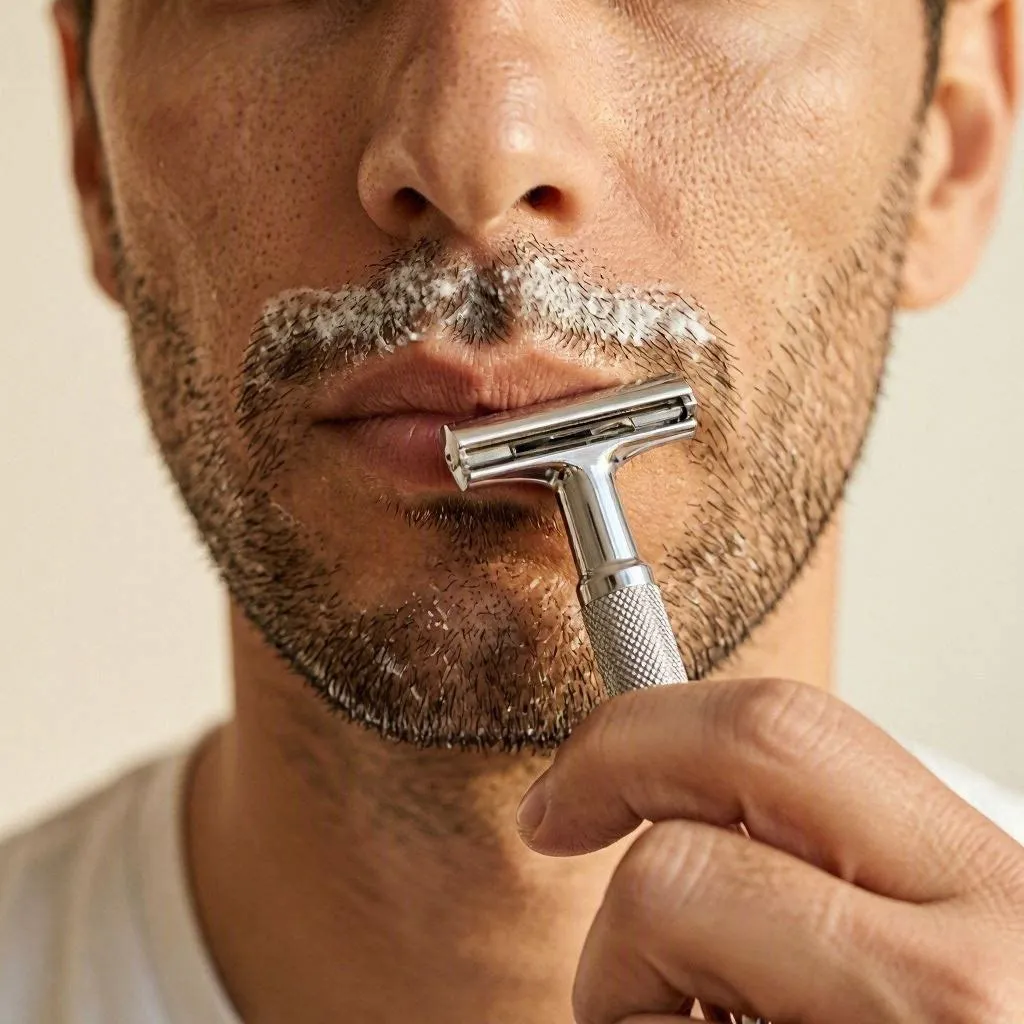
The upper lip is one of the most sensitive and awkward areas to shave with a safety razor. The space is tight, the hair is dense, and the skin is thin, which is why many beginners experience nicks, irritation, or uneven results here.
This guide gives you a clear, step‑by‑step method to shave your upper lip properly with a safety razor, avoid cuts, and get a smooth, comfortable finish every time.
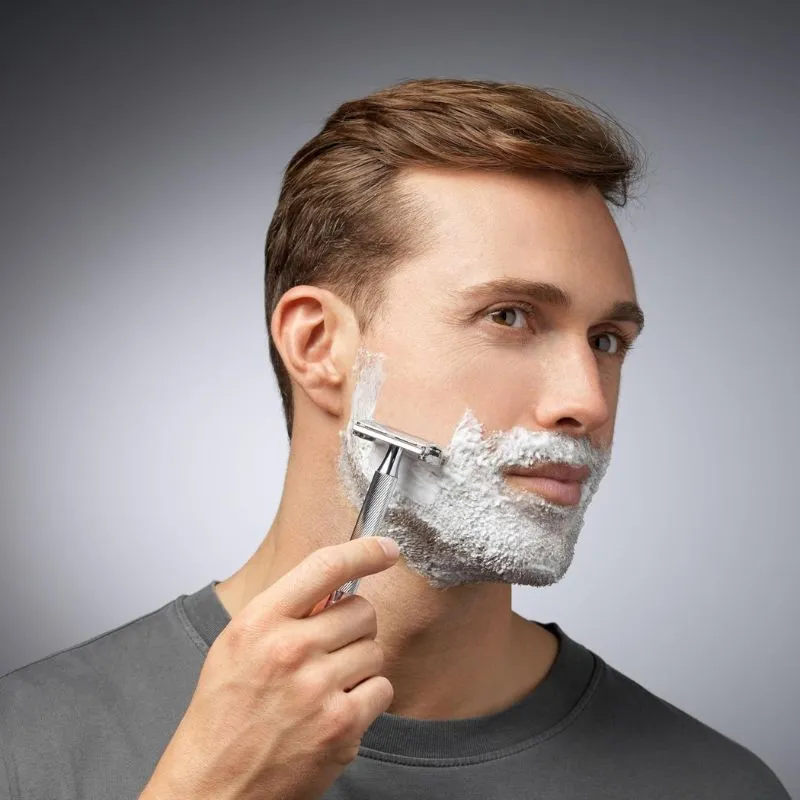
Quick Summary
- Hydrate the area properly
- Use slick, hydrated lather
- Keep the razor angle shallow
- Use very short strokes
- Stretch the skin gently
- Shave downwards first
- Avoid ATG until technique improves
- Use a soothing balm afterwards
Why the Upper Lip Is Hard to Shave With a Safety Razor
The upper lip causes problems because:
- The skin is thin and sensitive
- The space is tight, limiting razor movement
- The hair is often dense and coarse
- The nose gets in the way
- Many beginners use too steep an angle
- Nicks happen easily due to pressure
Understanding these challenges helps you fix them.
Step 1 — Prep Properly (Hydration Is Critical)
Upper‑lip hair is dense and wiry. If it’s not hydrated, it will tug — even with a sharp blade.
Do this every time:
- Splash warm water
- Apply slick shaving cream or soap
- Let it sit for 30–60 seconds
- Shave your cheeks first to give the lip extra hydration time
This softens the hair and reduces resistance.
Step 2 — Map Your Grain
Most men discover:
- Upper lip hair grows straight down
- Corners may grow slightly diagonally
- Under the nose is usually downwards
Knowing this prevents tugging and cuts.
Read How to Shave With a Safety Razor (Step‑by‑Step UK Guide).
Step 3 — Use a Shallow Angle (This Prevents Nicks)
The upper lip requires a shallower angle than the cheeks.
Technique:
- Place the razor head flat against the skin
- Slowly lower the handle until the blade just begins to cut
- Maintain that shallow angle throughout the stroke
A steep angle causes scraping and nicks.
Step 4 — Use Very Short Strokes
Long strokes are dangerous on the upper lip.
Use short, controlled strokes:
- 5–10 mm at a time
- Slow and steady
- Frequent rinsing
This gives you maximum control and prevents cuts. Read Safety Razor Aggressiveness Explained (UK Guide)
Step 5 — Stretch the Skin Gently
Skin stretching helps flatten the area.
How to do it:
- Curl your upper lip downward over your teeth
- Or use your free hand to pull the skin sideways
- Or lift your nose slightly with your finger
This exposes the hairs and prevents razor skipping.
Step 6 — Shave Downwards First (WTG)
Your first pass should always be with the grain.(WTG)
Correct method:
- First pass: downwards
- Second pass: across the grain [ATG] (optional)
- Against the grain: only if your skin tolerates it
ATG on the upper lip is the most common cause of:
- Nicks
- Redness
- Irritation
- Ingrown hairs
Avoid ATG until your technique is solid. Visit our Safety Razor Troubleshooting: Fix Razor Burn, Tugging & Nicks guide
Step 7 — Use a Sharp Blade for Upper‑Lip Stubble
Upper‑lip hair is dense — mild blades often tug.
Best blades for upper‑lip shaving:
- Feather Hi‑Stainless
- Gillette Silver Blue
- Gillette Nacet
- Astra Superior Platinum
Read Best Safety Razor Blades for Coarse Beard Growth, or Read Best Safety Razor Blades for Sensitive Skin (UK Guide)
Step 8 — Shave the Corners Carefully
The corners of the upper lip are where most nicks happen.
Technique:
- Use diagonal strokes
- Keep pressure extremely light
- Stretch the skin sideways
- Maintain a shallow angle
Take your time — this area is sensitive.
Step 9 — Finish With Cold Water + Balm
Cold water reduces inflammation. A soothing balm prevents redness.
Avoid alcohol‑based aftershaves — they sting and dry the skin.
Step 10 — Exfoliate Between Shaves
Do this 2–3 times per week:
- Use a gentle scrub
- Or a chemical exfoliant (salicylic acid works well)
This prevents ingrown hairs and keeps pores clear.
Final Recommendation
Shaving your upper lip with a safety razor requires:
- Good prep
- A shallow angle
- Short strokes
- Gentle stretching
- Sharp blades
- Grain‑aware shaving
Read our Complete Safety Razor UK Guide, or Read How to Shave Your Chin & Jawline Properly (UK Guide)
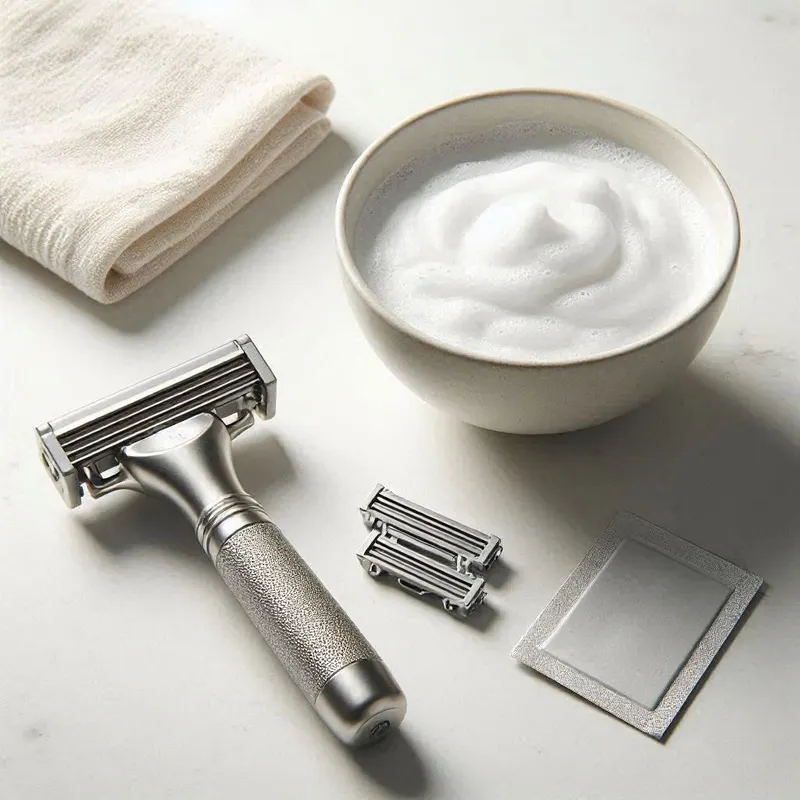
Once you master these techniques, the upper lip becomes easy — smooth, comfortable, and irritation‑free.