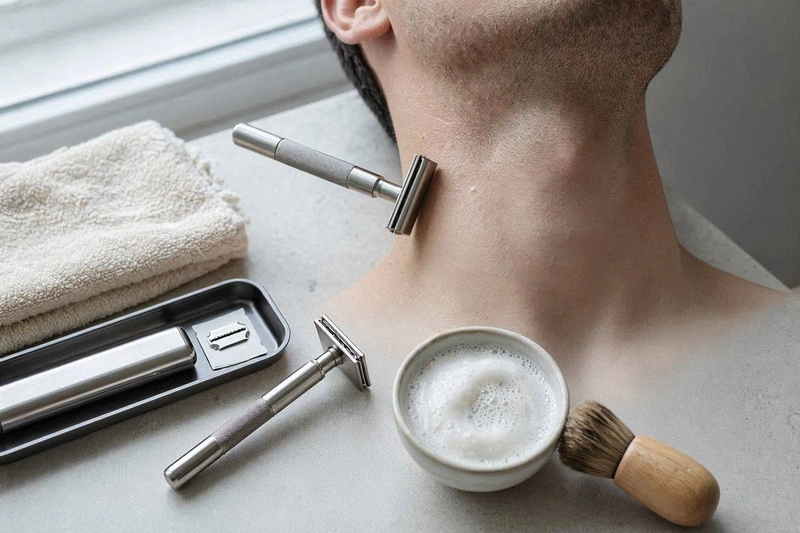
The neck is the hardest area to shave — especially with a safety razor. Hair grows in multiple directions, the skin is softer, and the curves of the jawline make it easy to miss patches or cause irritation.
If you struggle with razor burn, redness, bumps, or tugging on your neck, you’re not alone. The good news? Neck irritation is almost always fixable with the right technique.
This guide gives you a clear, step‑by‑step method to shave your neck properly and avoid the most common mistakes.
Quick Summary
- Map your neck grain
- Use slick, hydrated lather
- Shave with the grain first
- Use light pressure
- Short strokes only
- Stretch the skin gently
- Avoid ATG until comfortable
- Use a soothing, alcohol‑free balm
Why the Neck Is So Hard to Shave
The neck is a problem area because:
- Hair grows in multiple directions
- Skin is thinner and more sensitive
- The surface is curved, especially under the jaw
- Sweat and collars increase irritation
- Many people shave against the grain too early
Understanding these challenges is the key to fixing them.
Step 1 — Map Your Neck Grain
This is the most important step — and the one most men skip.
How to do it:
- Run your fingers across your neck in different directions
- The direction that feels smoothest is with the grain
- The direction that feels roughest is against the grain
Most men discover their neck hair grows:
- Downwards under the jaw
- Sideways near the Adam’s apple
- Upwards at the lower neck
Once you know your grain map, shaving becomes much easier.
If you’re new to technique, read How to Shave With a Safety Razor (Step‑by‑Step UK Guide).
Step 2 — Prep the Neck Properly
The neck needs more preparation than the cheeks.
Do this every time:
- Splash with warm water
- Use a gentle exfoliating wash
- Apply a slick shaving cream or soap
- Let it sit for 30–60 seconds to soften the hair
Dry lather = irritation.
Step 3 — Start With the Grain (WTG)
Shaving against the grain on the neck is the fastest way to cause:
- Razor burn
- Red bumps
- Ingrown hairs
- Patchy irritation
Correct technique:
- First pass: with the grain
- Second pass: across the grain
- Against the grain: optional — only if your skin tolerates it
If irritation is an issue, read Safety Razor Troubleshooting: Fix Razor Burn, Tugging & Nicks.
Step 4 — Use Short, Light Strokes
The neck is sensitive. Pressing harder does not give a closer shave — it just scrapes the skin.
Use:
- Short strokes
- Light pressure
- Frequent rinsing
Long strokes skip over curves and cause missed patches.
Step 5 — Shave the Jawline in Two Parts
The jawline is where most people miss hairs.
Technique:
- Tilt your head slightly to stretch the skin
- Shave above the jawline first
- Then shave below the jawline separately
- Use short strokes to maintain contact
This prevents the razor from skipping over the curve.
Step 6 — Use Gentle Skin Stretching
To flatten the neck:
- Place two fingers just below the area you’re shaving
- Gently pull the skin downward
- This creates a flat surface for the blade
Do not overstretch — it can cause ingrown hairs.
Step 7 — Avoid ATG Until Your Skin Is Ready
Going against the grain on the neck is risky until your technique is solid.
If you get irritation:
- Skip ATG for a week
- Use WTG + XTG only
- Improve prep and lather
Your skin will adapt over time.
Step 8 — Rinse With Cold Water + Apply a Soothing Balm
Cold water reduces inflammation. A non‑alcoholic balm prevents redness and irritation.
Look for ingredients like:
- Aloe vera
- Witch hazel
- Chamomile
- Niacinamide
Avoid alcohol‑based aftershaves — they sting and dry the skin.
Step 9 — Avoid Tight Collars Immediately After Shaving
Shirts, ties, and hoodies can rub freshly shaved skin and cause irritation.
If possible, shave after dressing for work, not before.
Step 10 — Exfoliate Between Shaves
Do this 2–3 times per week:
- Use a chemical exfoliant (salicylic acid is best)
- Or a gentle scrub
- Or a soft exfoliating cloth
This prevents ingrown hairs and keeps pores clear.
Final Recommendation
Shaving the neck properly is all about:
- Mapping your grain
- Using light pressure
- Shaving with the grain first
- Using slick lather
- Stretching the skin gently
- Avoiding ATG until comfortable
With the right technique, you can eliminate irritation, reduce redness, and get a smooth, comfortable neck shave every time.