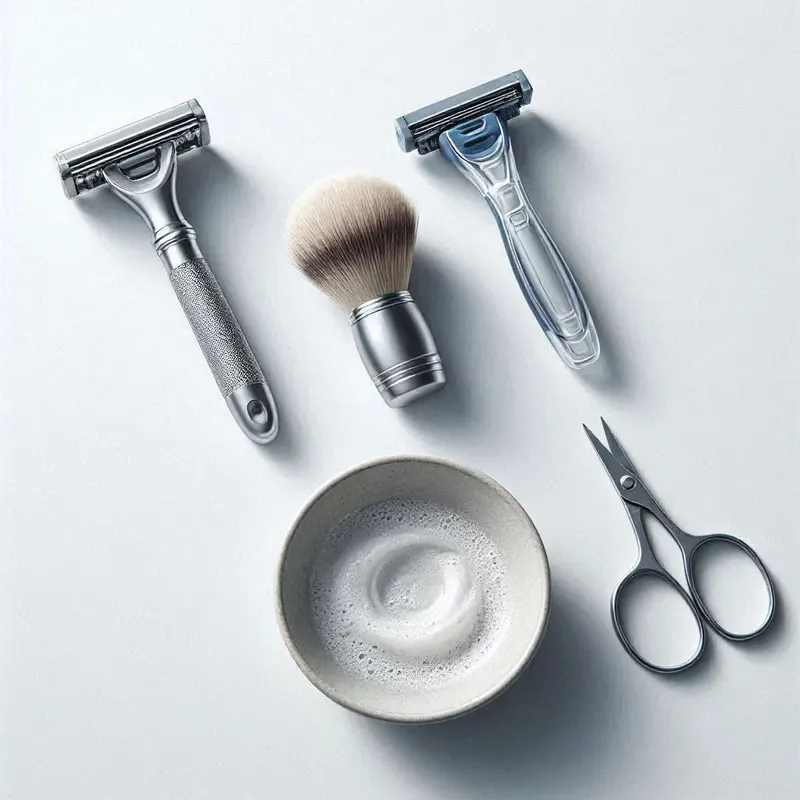
New to wet shaving? This beginner‑friendly guide explains every essential shaving tool — razors, brushes, bowls, blades and more — so you know exactly what you need for a smooth, comfortable shave.
Why Shaving Tools Matter
A great shave isn’t just about the razor. Your brush, bowl, blades and pre‑shave tools all play a role in how smooth, comfortable and irritation‑free your shave feels.
When you understand what each tool does, you can build a setup that suits your skin, beard and shaving style. This guide breaks down every essential tool so beginners can start with confidence.
Your tools work best when paired with the right products, and the beginner’s shaving products guide explains how creams, soaps and oils fit into your routine.
Razors: The Foundation of Your Setup
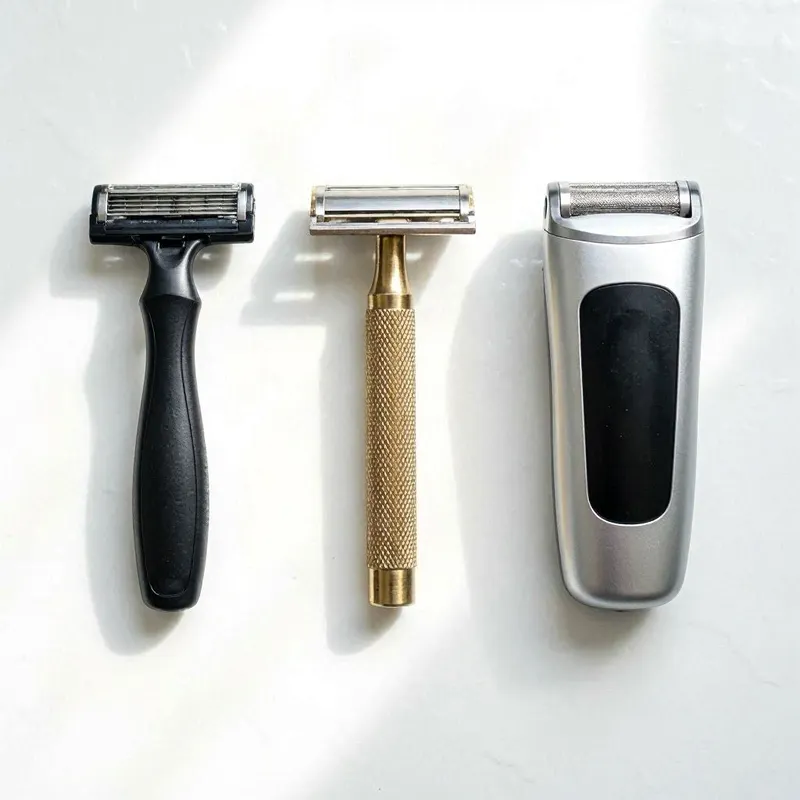
Your razor determines how close, comfortable and predictable your shave will be.
- Cartridge razors are the easiest for beginners because they require almost no technique.
- Safety razors offer more control, less irritation and lower long‑term cost.
- Electric shavers are fast, gentle and ideal for sensitive or acne‑prone skin.
If you’re still choosing your first razor, you can revisit beginner razor guidance.
Blades: Sharpness and Comfort
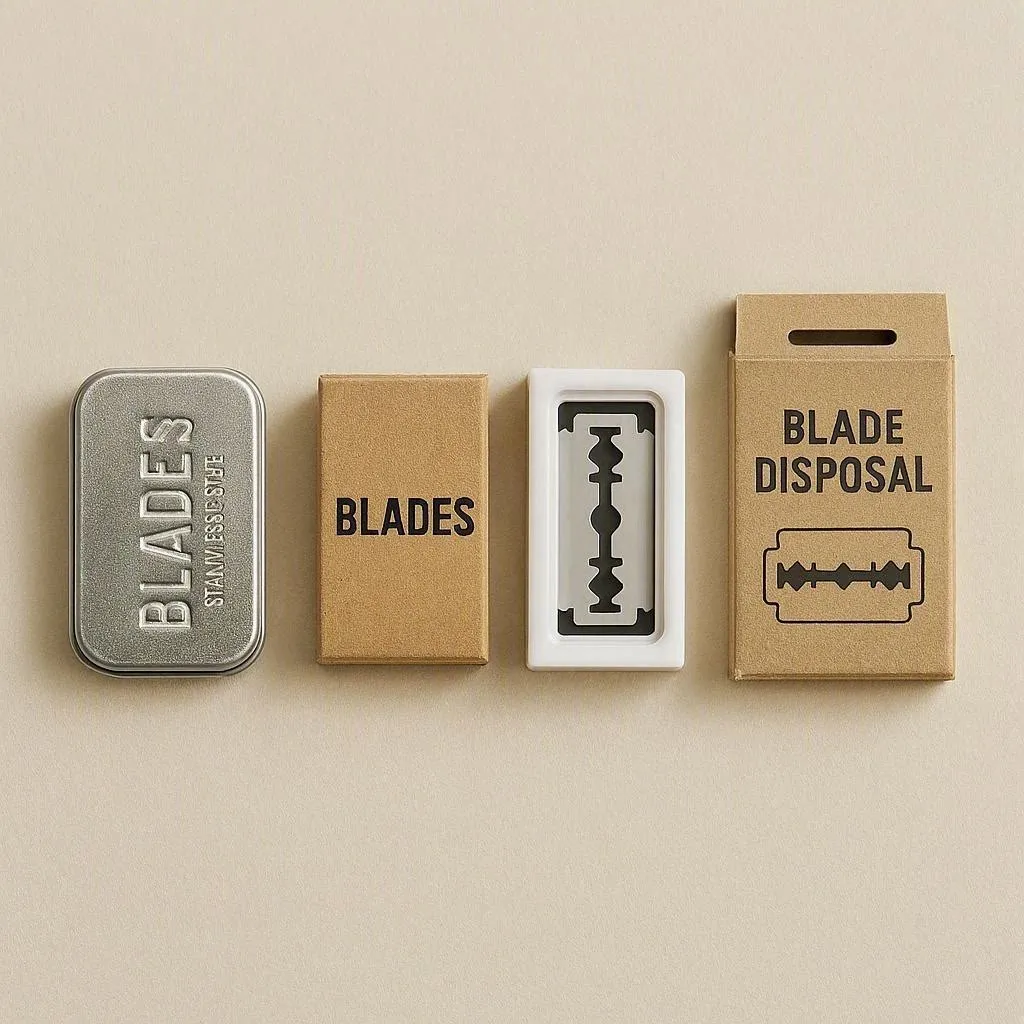
If you use a safety razor, the blade you choose makes a huge difference. Some blades are sharper and better for coarse hair, while others are smoother and more forgiving for sensitive skin.
Beginners often start with a mild, smooth blade to avoid irritation while learning technique.
Cartridge razors use pre‑set blades, but replacing them regularly is essential for avoiding tugging and pulling.
Shaving Brush: The Key to Better Lather
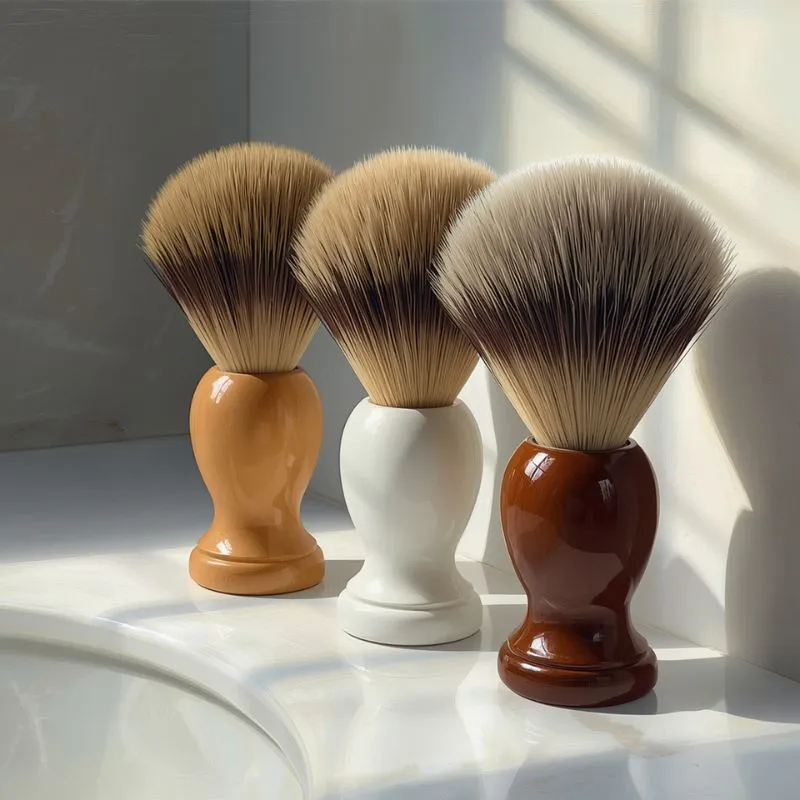
A shaving brush lifts the hairs, exfoliates the skin and builds a richer, more protective lather.
- Synthetic brushes are ideal for beginners because they’re affordable, soft, fast‑drying and easy to maintain.
- Badger and boar brushes offer different levels of backbone and softness, but they require more care.
A good brush improves glide, reduces irritation and helps the razor cut more efficiently.
Shaving Bowl or Mug: Better Lather, Better Shave
A shaving bowl helps you build a consistent, creamy lather. It gives you more control over hydration, texture and volume. Beginners often find bowl‑lathering easier because it’s more predictable than face‑lathering.
Ceramic, metal and plastic bowls all work well — the material doesn’t matter as much as the technique.
Shaving Cream or Soap: Your Skin’s First Line of Defence
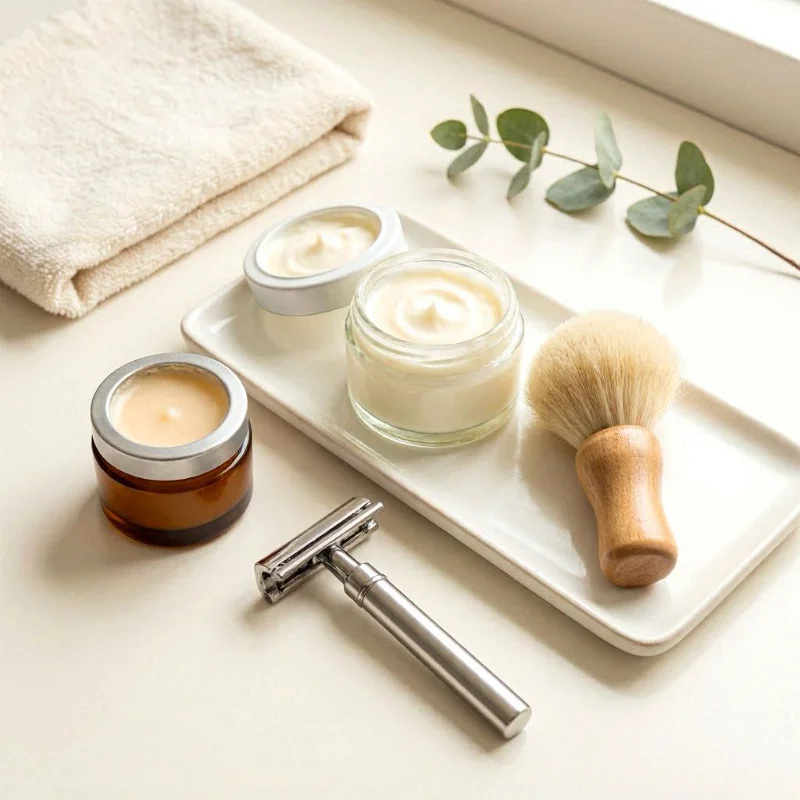
Your lather protects the skin, softens the beard and reduces friction.
- Shaving creams are the easiest for beginners because they lather quickly and stay slick.
- Shaving soaps offer more control and can be more economical, but they require a brush and a bit more practice.
- Foams from a can are convenient but often dry out quickly and don’t provide enough protection for sensitive skin.
Pre‑Shave Products: Extra Glide and Comfort
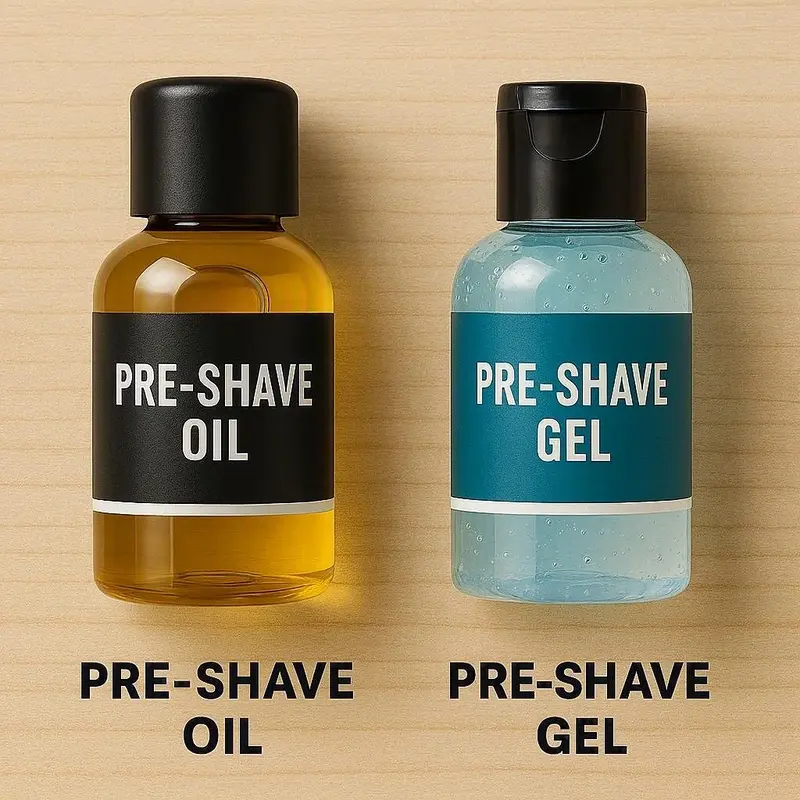
Pre‑shave products improve razor glide and reduce irritation.
- Pre‑shave oil gives deep cushioning and is ideal for dry or sensitive skin.
- Pre‑shave gel is lighter and better for oily or acne‑prone skin.
If you’re unsure which one suits you, you can revisit oil vs gel guidance.
Aftershave: Essential for Skin Recovery
Aftershave calms the skin, reduces redness and prevents razor burn.
- Aftershave balm is soothing and hydrating, making it ideal for dry or sensitive skin.
- Aftershave lotion is lighter and better for normal or oily skin.
Avoid alcohol‑based splashes because they sting and dry the skin. If you want help choosing, you can revisit balm vs lotion comparisons.
Moisturiser: The Final Step for Healthy Skin
Moisturiser locks in hydration and keeps the skin barrier strong. This step reduces irritation, prevents dryness and helps the skin stay smooth throughout the day.
Gel‑creams work well for oily skin, while richer creams suit dry or sensitive skin. Moisturising after shaving is one of the most effective ways to prevent razor burn.
Optional Tools That Make Shaving Easier
- A styptic pencil helps stop small nicks quickly.
- A beard comb helps you map your grain and understand how your hair grows.
- A razor stand keeps your tools dry and prevents rust.
- A travel case protects your razor and blades when you’re on the move.
These aren’t essential, but they make your shaving routine cleaner, safer and more organised.
For technique, the step‑by‑step shaving routine shows how to use your tools effectively.
Build Your Setup Slowly and Confidently
You don’t need everything at once. Start with razor, blades, a brush and a good shaving cream. Add pre‑shave and aftershave products as you refine your routine. As your technique improves, you’ll naturally discover which tools make the biggest difference for your skin and beard.
If you want to complete the beginner series, the next step is Beginner’s Guide to Shaving Products.