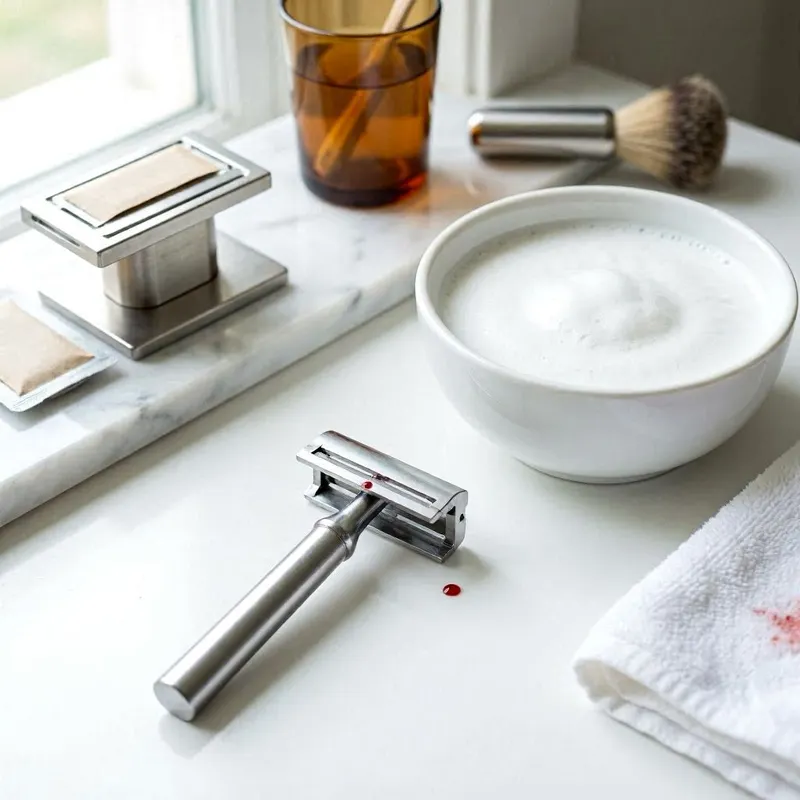
Nicks and cuts are usually caused by pressure, poor preparation, dull blades or the wrong shaving angle. This guide shows you how to avoid shaving cuts completely using simple technique changes and better razor control.
Why Nicks and Cuts Happen
Even experienced shavers get the occasional nick — but if it happens often, something in your routine needs adjusting.
Common causes include:
- too much pressure
- shaving too fast
- dull blades
- poor lubrication
- wrong shaving angle
- uneven skin surfaces
- shaving against the grain too early
The good news? Most cuts are easy to prevent with a few simple changes. If you’re using cartridges, the cartridge razor technique guide shows how to control pressure and angle more effectively.
1. Start With Proper Skin Preparation
Cuts happen more easily when the skin is dry or tight.
Before shaving:
- wash your face with warm water
- soften the beard for 30–60 seconds
- use a gentle cleanser
- apply pre‑shave oil if you have sensitive skin
Soft, hydrated hair cuts cleanly, reducing the risk of the razor catching the skin.
2. Use a Sharp Blade Every Time
A dull blade drags, skips and scrapes — all of which lead to cuts.
Replace your blade:
- cartridge: every 5–10 shaves
- safety razor: every 3–5 shaves
- electric foil: every 12–18 months
If you feel tugging, stop and change the blade.
3. Build a Protective Lather
A thin or dry lather exposes the skin and increases the chance of cuts.
Use:
- shaving cream
- shaving soap
- or a brush‑built lather
A good lather:
- cushions the skin
- lifts the hairs
- improves razor glide
- prevents the blade from catching
If your lather dries out, reapply before shaving.
4. Use Light Pressure — Let the Razor Do the Work
Most nicks happen because of too much pressure.
Light pressure:
- protects the skin
- prevents scraping
- reduces friction
- gives a smoother shave
Hold the razor lightly and glide it — don’t press.
5. Maintain the Correct Shaving Angle
The wrong angle can cause the blade to dig into the skin.
Safety razor:
Aim for a 30° angle — handle slightly away from the face.
Cartridge razor:
The angle is built in, but pressure still matters.
Electric shaver:
Keep the foil flat against the skin.
A consistent angle prevents the blade from catching.
6. Shave With the Grain First
Shaving against the grain too early is a major cause of cuts.
Your first pass should always be:
- with the grain
- using short strokes
- with light pressure
Once the bulk is removed, you can shave across the grain for closeness.
7. Use Short, Controlled Strokes
Long strokes increase the chance of:
- slipping
- catching the skin
- uneven pressure
Short strokes give you more control and reduce the risk of nicks.
Beginners often cut themselves due to simple errors, and the shaving mistakes guide explains how to avoid them.
8. Keep the Razor Clean
A clogged razor can’t cut properly and may skip across the skin.
Rinse:
- every few strokes
- under warm running water
- until the blade is clear
Never tap the razor aggressively — it can damage the blade.
9. Be Careful Around Problem Areas
Some areas are more prone to cuts:
- jawline
- chin
- upper lip
- Adam’s apple
- corners of the mouth
Tips:
- use shorter strokes
- reduce pressure
- stretch the skin gently
- slow down
These areas require precision, not speed.
10. Don’t Shave Over Irritated or Damaged Skin
If the skin is already:
- red
- inflamed
- broken
- dry
- sunburned
…you’re far more likely to cut yourself.
Give the area time to heal before shaving again.
11. Finish With Cool Water
Cool water:
- calms the skin
- reduces redness
- closes pores
This helps prevent irritation and prepares the skin for aftershave.
12. Use a Soothing Aftershave Balm
Avoid alcohol‑based splashes — they sting and dry the skin.
Use:
- aloe vera
- witch hazel (alcohol‑free)
- allantoin
- panthenol
These help the skin recover and reduce the chance of post‑shave irritation. For a smoother, safer shave overall, the step‑by‑step shaving routine helps you structure your passes correctly.
Quick Checklist to Prevent Nicks
- Is your blade sharp?
- Is your beard fully hydrated?
- Are you using enough lather?
- Are you shaving with the grain first?
- Are you using light pressure?
- Are you keeping the razor clean?
- Are you slowing down around tricky areas?
Fixing even one of these can eliminate cuts completely.
Final Takeaway
Nicks and cuts are almost always caused by pressure, dull blades or poor preparation. With proper hydration, a sharp blade, good lather and gentle technique, you can enjoy a smooth, cut‑free shave every time.